
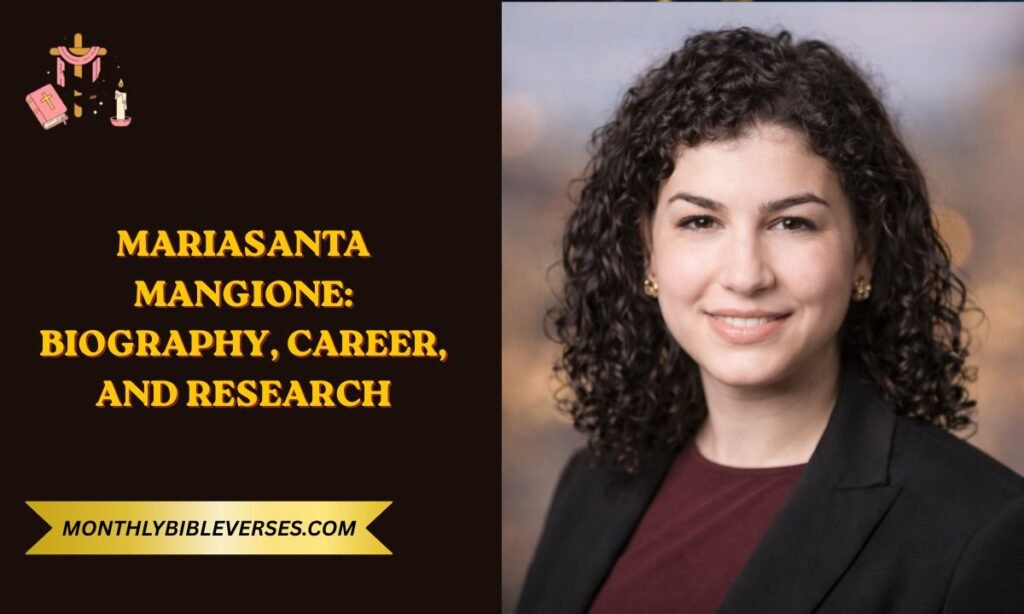
Some careers are built in plain sight. Others take shape across years of laboratory work, medical training, and patient care — quietly accumulating meaning long before public attention arrives. MariaSanta Mangione’s career belongs firmly to the second kind.
In an era when names often surface in search engines for the wrong reasons, MariaSanta Mangione is someone whose professional record stands on its own terms. She is an American physician-scientist — a dual-trained clinician and researcher whose work spans cellular biology and cardiovascular medicine. Her training reflects one of the most demanding pathways in American medicine, and her research contributions, while not yet widely known outside academic circles, are substantive and growing.
This article traces her verified professional journey from early academic foundations to her current role at one of the country’s leading medical institutions — grounded entirely in publicly available records and peer-reviewed documentation.
Quick Bio
| Detail | Information |
| Full Name | MariaSanta Zannino Mangione |
| Date of Birth | January 1990 (approximate) |
| Place of Birth | Towson, Maryland, USA |
| Ethnicity / Background | Italian-American |
| Education | B.S. Cell Biology & Molecular Genetics, Univ. of Maryland (2008–2012); M.D./Ph.D., Vanderbilt University School of Medicine (2012–2020) |
| Current Role | Clinical Fellow in Cardiology, UT Southwestern Medical Center, Dallas, TX |
| Research Areas | Cardiometabolic disease, transplant immunology, cytokinesis, inflammation in cardiovascular disease, macrophage function |
| Notable Publications | “Molecular Form and Function of the Cytokinetic Ring” (2019); “Efficacy of Bortezomib Desensitization Among Heart Transplant Candidates” (2023); “mTOR in Regulating Macrophage Function in Inflammatory Cardiovascular Diseases” (2024) |
| Grant | NIH/NIGMS research grant (Vanderbilt, doctoral phase) |
| Scholar Citations | 194+ (Google Scholar) |
Who is MariaSanta Mangione?
MariaSanta Mangione is an American physician-scientist currently serving as a Clinical Fellow in Cardiology at the University of Texas Southwestern Medical Center (UTSW) in Dallas, Texas. She holds both an M.D. and a Ph.D. from Vanderbilt University School of Medicine, representing one of the most rigorous and selective training pathways in academic medicine.
Her professional identity is defined by a dual commitment: to the laboratory, where she investigates the molecular mechanisms underlying cardiovascular disease, and to the clinic, where she applies that knowledge to real patients with complex heart conditions. This combination — often described as the physician-scientist model — is both rare and increasingly valued in a medical landscape where the most pressing diseases resist simple solutions.
Mangione grew up in Towson, Maryland, in an Italian-American family that placed strong emphasis on education, community, and intellectual pursuit. She was the eldest of three siblings, and her early academic trajectory reflected the intellectual environment her upbringing fostered. By the time she entered university, her direction was already clearly oriented toward science.
Early Academic Direction and Scientific Foundations
MariaSanta Mangione began her formal scientific training at the University of Maryland, College Park, where she earned a Bachelor of Science in Cell Biology and Molecular Genetics between 2008 and 2012. The choice of major was telling. Cell biology and molecular genetics sit at the foundation of nearly all modern biomedical research — they provide the conceptual vocabulary through which disease is understood at its most fundamental level.
Her undergraduate years established fluency in the language of molecular mechanisms: how genes are expressed, how proteins interact, how cellular systems maintain order and fail under stress. These are not peripheral skills for a physician. For a physician-scientist, they are the lens through which clinical problems are examined.
Her academic performance during this period earned her the trajectory needed to enter one of the most competitive training programs in American medicine: the M.D./Ph.D. dual-degree program at Vanderbilt University School of Medicine. Acceptance into such programs typically requires outstanding academic credentials, strong research experience, and a demonstrated capacity for scientific thinking alongside clinical aptitude.
Research Focus: Understanding Life at the Cellular Level
At Vanderbilt, MariaSanta Mangione’s doctoral research focused on cytokinesis — the final and mechanically complex phase of cell division in which one parent cell physically separates into two daughter cells. This process, while occurring billions of times daily in the human body, involves extraordinary biochemical precision.
Her work examined the behavior of specific proteins during this stage, particularly those belonging to the F-BAR protein family — including a key protein known as Cdc15. These proteins play a structural role in forming and stabilizing the cytokinetic ring, a contractile structure whose proper assembly and disassembly is essential for successful cell division. Errors in this process are implicated in cancer development, developmental disorders, and tissue dysfunction.
Mangione’s doctoral research was supported by an NIH/NIGMS research grant — a nationally competitive funding distinction that reflects the merit and scientific significance of her work at Vanderbilt.
In 2019, she was credited as a contributor to the peer-reviewed publication “Molecular Form and Function of the Cytokinetic Ring”, a study that advanced scientific understanding of how cellular division machinery is regulated. This work appeared in recognized scientific literature and has accumulated meaningful citations in subsequent research — evidence that it contributed genuine value to the field.
These investigations were conducted using model organisms, a standard approach in foundational biology. The insights drawn from model systems are frequently transferable to human biology, which is precisely why this kind of research forms such a valuable part of medical training.
Transition From Bench Science to Clinical Medicine
One of the most defining — and demanding — aspects of MariaSanta Mangione’s career is her transition from pure laboratory research to full clinical medicine. After completing her doctoral work, she continued into the clinical phase of her M.D./Ph.D. training, completing medical school and subsequently entering a residency in internal medicine.
Internal medicine is the broad foundation from which most medical subspecialties grow. It demands diagnostic precision, comfort with clinical uncertainty, and the ability to manage multiple overlapping conditions across diverse patient populations. For a researcher accustomed to the controlled environment of the laboratory, this transition represents a profound shift — from isolating variables to navigating the full complexity of human illness.
Successfully completing internal medicine residency while maintaining a research identity is itself a significant achievement. It requires not just technical competence but the intellectual flexibility to hold both scientific and clinical perspectives simultaneously — and to know when each is most useful.
| Period | Institution | Qualification / Focus |
| 2008–2012 | University of Maryland, College Park | B.S. Cell Biology & Molecular Genetics |
| 2012–2020 | Vanderbilt University School of Medicine | M.D./Ph.D. — Cytokinesis, F-BAR proteins, NIH/NIGMS grant recipient |
| Post-2020 | Internal Medicine Residency | Clinical foundation; transition to subspecialty training |
| Current | UT Southwestern Medical Center, Dallas | Clinical Fellowship in Cardiology — patient care + cardiovascular research |
Cardiology Fellowship and Specialized Training
MariaSanta Mangione is currently a Clinical Fellow in Cardiology at the University of Texas Southwestern Medical Center — one of the most prestigious academic medical centers in the United States and home to multiple Nobel laureates. UT Southwestern is internationally recognized for its research infrastructure, clinical excellence, and commitment to training physician-scientists at the highest level.
A cardiology fellowship is among the most competitive subspecialty training programs in medicine. It typically spans three years and exposes fellows to the full scope of cardiovascular care:
- Heart failure management — including advanced therapies and transplant evaluation
- Interventional cardiology — catheterization, stenting, and structural heart procedures
- Cardiac imaging — echocardiography, MRI, and nuclear cardiology
- Electrophysiology — arrhythmia diagnosis and ablation
- Transplant and advanced heart failure medicine — particularly relevant to Mangione’s research interests
Beyond clinical rotations, fellows are expected to produce scholarly work — through clinical trials, translational research projects, or outcomes studies. Mangione’s pre-existing research background gives her a significant advantage in this environment, where scientific literacy and the ability to critically evaluate evidence are not optional.
Research Evolution: Inflammation and Cardiovascular Disease
As her career moved into cardiology, MariaSanta Mangione’s research interests evolved in a direction that reflects both personal expertise and global medical priority. Her post-doctoral work has focused increasingly on the role of inflammation in cardiovascular disease — a field that has transformed how scientists and clinicians understand conditions like heart failure, atherosclerosis, and ischemic injury.
Key areas of her current and recent research include:
- Transplant immunology: Her 2023 co-authored paper, “Efficacy of Bortezomib Desensitization Among Heart Transplant Candidates,” addressed one of the most challenging problems in transplant medicine — how to prepare patients whose immune systems have developed antibodies that complicate donor matching. Bortezomib is a proteasome inhibitor that depletes antibody-producing plasma cells, and research into its effectiveness directly improves outcomes for patients who might otherwise wait indefinitely for a compatible heart.
- Macrophage function and cardiovascular disease: Her 2024 work on the “Mechanistic target of rapamycin (mTOR) in regulating macrophage function in inflammatory cardiovascular diseases” examines how a specific cellular signaling pathway influences immune cell behavior in the heart. Macrophages are versatile immune cells that play complex roles in both inflammation and repair — understanding how mTOR regulates them in cardiac tissue opens potential new therapeutic targets.
- Ischemia and immune response: Additional research associates her with studies on inflammatory pathways activated during ischemia, the condition in which reduced blood flow damages heart tissue. This is directly relevant to heart attack biology and post-infarction recovery.
Across all of these projects, a consistent theme emerges: Mangione is interested in how the immune system shapes cardiovascular outcomes — not just as a bystander to heart disease, but as an active participant whose dysregulation can worsen or potentially improve prognosis.
The Broader Medical Context
Understanding MariaSanta Mangione’s work requires some appreciation of the medical landscape she operates within. Cardiovascular disease remains the single leading cause of death globally, responsible for approximately one-third of all deaths worldwide according to the World Health Organization. In the United States alone, hundreds of thousands of people die each year from heart-related conditions.
The field has undergone a significant conceptual shift in recent decades. Heart disease is no longer viewed purely as a mechanical problem — blocked arteries, failing pumps, damaged valves. It is increasingly understood as a systemic, immune-modulated condition, shaped by inflammation, metabolic dysfunction, genetic predisposition, and environmental factors. This shift has created enormous demand for researchers who can work at the intersection of immunology, genetics, metabolism, and cardiovascular physiology.
Mangione’s training places her precisely at that intersection. Her cell biology background gives her depth in molecular mechanisms. Her clinical cardiology training grounds those mechanisms in patient reality. That combination is exactly what translational medicine — taking discoveries from the lab to the bedside — requires.
Public Attention and Responsible Interpretation
MariaSanta Mangione’s name entered broader public awareness not because of her research, but because of her family connection to Luigi Mangione, whose arrest in late 2024 in connection with a high-profile criminal case attracted intense media coverage. The Mangione family released a public statement expressing shock and asking for privacy. MariaSanta has not made public statements about the case, and the media attention surrounding it has not reflected on her professional record in any meaningful way.
It is worth stating clearly: her biography and her career are hers alone. She has spent more than a decade building a serious medical career through independent effort, rigorous training, and peer-reviewed scientific contribution. That record stands entirely on its own merits, separate from any family circumstances.
Responsible biographical coverage of a figure like MariaSanta Mangione means focusing on what she has actually built — and what that building reveals about the demands and values of serious medical science.
A Career Reflecting Modern Medicine
MariaSanta Mangione’s trajectory embodies something broader than one person’s professional path. She represents the physician-scientist model at its most demanding — a training approach that asks individuals to delay financial and professional independence for a decade or more, trusting that deeper scientific understanding ultimately produces better medicine.
That model is under pressure. Training timelines are long. Research funding is intensely competitive. Clinical workloads continue to expand. Many talented trainees abandon the dual track, choosing either pure research or pure clinical medicine. Those who persist — and who build genuinely productive careers on both sides of the bench-to-bedside divide — do so through uncommon commitment and intellectual courage.
Mangione’s quiet professional presence — no social media persona, no popular science presence, no self-promotional platform — is itself characteristic of this cohort. Her influence, to the extent it exists and grows, will be felt through citations, clinical protocols, and patient outcomes rather than through public visibility. That is what serious medical science usually looks like, and it deserves recognition on those terms.
Conclusion
MariaSanta Mangione is a physician-scientist whose career reflects the full weight of what that title means: years of foundational laboratory research, the demanding transition to clinical medicine, and an ongoing commitment to understanding cardiovascular disease at the molecular level. From her undergraduate years at the University of Maryland to her doctoral work on cytokinesis at Vanderbilt, and now her cardiology fellowship at UT Southwestern, each stage of her career has been marked by rigor, intellectual seriousness, and a consistent orientation toward problems that genuinely matter for human health.
Her story is one that rewards careful reading — not for dramatic headlines, but for what it reveals about how medicine advances: slowly, methodically, and through the sustained effort of people who ask hard questions and follow the evidence wherever it leads.
Frequently Asked Questions
Who is MariaSanta Mangione?
MariaSanta Mangione is an American physician-scientist, currently a Clinical Fellow in Cardiology at UT Southwestern Medical Center, known for research in cell biology, transplant immunology, and inflammatory cardiovascular disease.
Where did MariaSanta Mangione go to school?
She earned her B.S. in Cell Biology and Molecular Genetics from the University of Maryland (2008–2012) and her M.D./Ph.D. from Vanderbilt University School of Medicine (2012–2020).
What does MariaSanta Mangione research?
Her research spans cytokinesis, transplant immunology, macrophage function in inflammatory cardiovascular diseases, and the role of mTOR signaling in heart disease — bridging cell biology and clinical cardiology.
What are MariaSanta Mangione’s most notable publications?
Her most cited works include “Molecular Form and Function of the Cytokinetic Ring” (2019), “Efficacy of Bortezomib Desensitization Among Heart Transplant Candidates” (2023), and research on mTOR and macrophage function (2024).
Where does MariaSanta Mangione work?
She is currently a Clinical Fellow in Cardiology at the University of Texas Southwestern Medical Center in Dallas, Texas — one of the leading academic medical centers in the United States.
What is MariaSanta Mangione’s educational background?
She holds a dual M.D./Ph.D. degree from Vanderbilt University — a highly competitive training track combining medical school with doctoral research, which she completed in 2020.
Did MariaSanta Mangione receive any research grants?
Yes. During her doctoral training at Vanderbilt, she received a competitive NIH/NIGMS research grant for her work on the F-BAR protein Cdc15 and its role in cytokinetic ring formation.
What is the physician-scientist career path?
It is a dual-training model combining medical degree with doctoral research, preparing clinicians to conduct and apply scientific research — typically requiring 8–12 years of combined training before independent practice.
How is MariaSanta Mangione connected to Luigi Mangione?
Luigi Mangione is her brother; his arrest in late 2024 drew public attention to the Mangione family, though MariaSanta’s career and research are entirely independent of those circumstances.
What is the significance of MariaSanta Mangione’s cardiology research?
Her work on transplant desensitization and immune-mediated cardiovascular injury addresses critical gaps in treating heart failure and post-transplant complications — conditions affecting millions of patients globally.

Akash is a dedicated writer from the USA, committed to sharing insightful and inspiring Bible verses. With a focus on faith, spiritual growth, and daily encouragement, he aims to provide readers with meaningful scripture reflections to strengthen their relationship with God and enrich their devotional journey.