
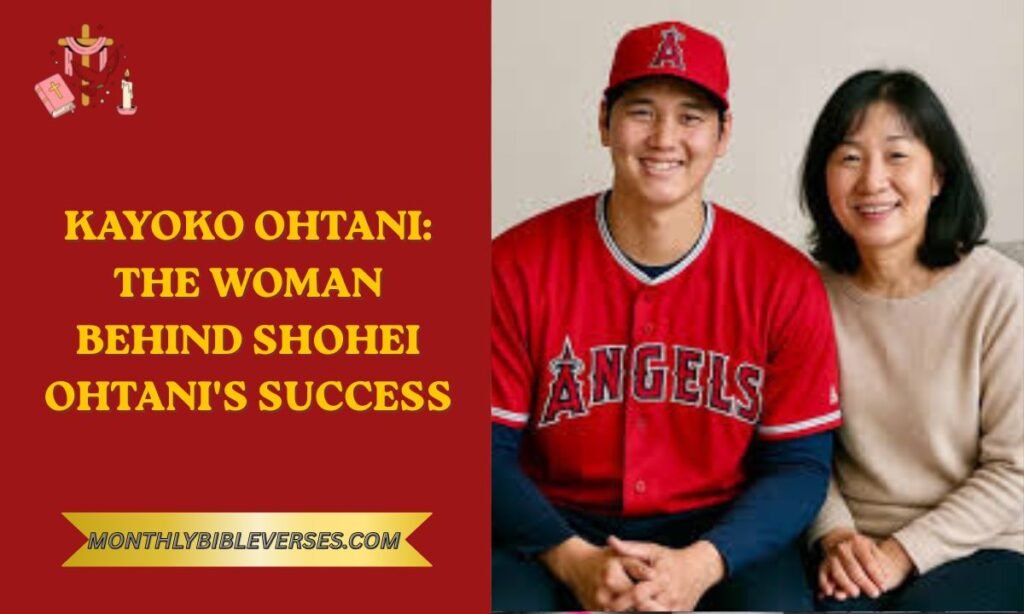
When the world watches Shohei Ohtani pitch a perfect inning and then step up to the plate and hit a home run in the same game, it sees a once-in-a-generation talent.
What it rarely sees is the woman who helped build that talent from the ground up. Kayoko Ohtani — mother, former athlete, and quiet force of nature — is one of the most significant yet least celebrated figures in one of baseball’s greatest success stories.
Long before the packed stadiums of Dodger Stadium, there was a small apartment in Ōshū, Iwate, a badminton court, and a mother who understood exactly what greatness required.
Quick Bio Table
| Detail | Information |
| Full Name | Kayoko Ohtani |
| Nationality | Japanese |
| Hometown | Ōshū, Iwate Prefecture, Japan |
| Spouse | Toru Ohtani |
| Children | Yuka Ohtani (daughter), Ryuta Ohtani (son), Shohei Ohtani (son) |
| Athletic Background | National-level badminton player (high school) |
| Height | Approx. 5’8″ (173 cm) |
| Known For | Mother of MLB superstar Shohei Ohtani |
| Social Media | None known |
| Current Residence | Ōshū, Japan |
Early Life and Background of Kayoko Ohtani
Kayoko Ohtani was born and raised in Japan, in the Iwate Prefecture region known for its close-knit rural communities and deeply held cultural traditions. From early in her life, she demonstrated a natural affinity for sports — most notably badminton, a discipline she pursued with enough dedication and skill to compete at the national level during high school.
That athletic background was not merely recreational. Competing at a national level requires rigorous physical conditioning, mental discipline, and the ability to perform under pressure — qualities that Kayoko absorbed and later transmitted to her children. According to her own account, Shohei was familiar with two sports before he discovered baseball — one of them was badminton, which she continued as a hobby, and she would take him to practice as a young child.
Her upbringing in Ōshū instilled the values that define her character: patience, humility, structure, and community. These were not abstract concepts — they were daily practices in the Ohtani household, woven into routines, conversations, and the way Kayoko carried herself as both an athlete and a parent.
Family and Parenting Philosophy
Kayoko married Toru Ohtani, a former amateur baseball outfielder who later worked at a Mitsubishi automobile manufacturing plant in Ōshū. Together, they raised three children: older daughter Yuka, older son Ryuta (who also plays in Japan’s Industrial Baseball League), and youngest son Shohei, born July 5, 1994.
In her own words, Kayoko described Shohei as “a normal baby” at birth — though she added, with a mother’s knowing smile, “I was sure he would shoot up like a weed.”
Her parenting philosophy rested on a careful balance. While Toru took on the role of baseball coach and technical trainer, Kayoko focused on the emotional architecture of her children’s development. Her approach emphasized:
- Character before achievement — Shohei was taught that good values must accompany talent
- Balance over intensity — She encouraged rest, play, and multiple sports rather than early specialization
- Emotional grounding — She provided warmth and calm to offset the pressures of competitive sport
- Cultural rootedness — She raised her children with a strong sense of Japanese identity: respect, humility, and perseverance
The result was not just a baseball player — it was a person. Shohei Ohtani’s well-documented humility, composure under pressure, and genuine sportsmanship are direct reflections of how Kayoko chose to raise him.
Read This Blog: Laufey Height: How Tall Is Laufey? The Singer of “From The Start” Explained
Role in Shohei Ohtani’s Baseball Career
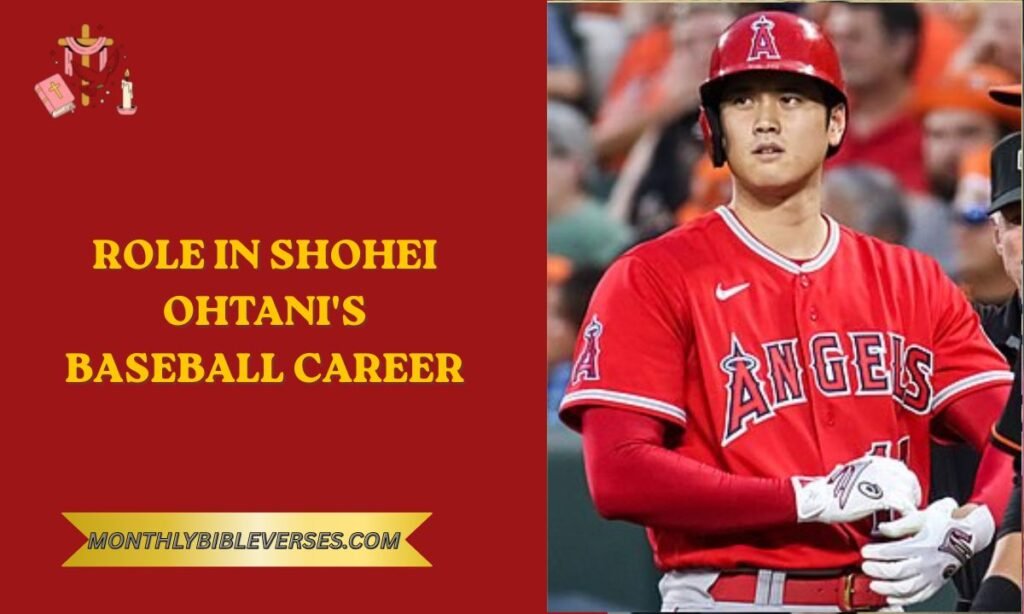
Kayoko’s influence on Shohei’s career began before he ever picked up a baseball bat. When Shohei was just two years old, she brought him along to her badminton practice sessions, letting him play freely with the equipment. He began swinging the racket instinctively, and Kayoko later noted in a 2014 interview that her husband believed the swinging mechanics of badminton and pitching a baseball were remarkably similar.
This early, multi-sport exposure was not an accident. Kayoko’s understanding of athletic development — drawn from her own competitive experience — led her to support Shohei’s participation in various physical activities: badminton, swimming, and eventually baseball. Swimming, which Shohei practiced from kindergarten through fifth grade, helped build the joint flexibility and body elasticity that became hallmarks of his pitching style.
By the time Shohei formally joined a Little League team in his third year of elementary school, he already had a body and mind primed for athletic excellence — and much of that foundation came from his mother’s instincts and investment.
Kayoko Ohtani’s Parenting Style and Emotional Support
While Toru handled the baseball training, Kayoko ensured Shohei stayed grounded and well-rounded, emphasizing the importance of humility, respect, and perseverance. Her quiet yet strong presence allowed Shohei to thrive both on and off the field.
Shohei has publicly acknowledged that his mother’s emotional support helped him manage the intense mental pressures of elite sport. When fame arrived rapidly — first in Japan’s Nippon Professional Baseball and then spectacularly in MLB — it was his mother’s teachings about staying grounded that prevented him from losing perspective.
Kayoko balanced Toru’s strict coaching style with warmth and quiet confidence. The Ohtani household valued discipline, but also laughter. That balance — structure without rigidity, expectation without suffocation — is precisely what elite youth development experts today identify as the optimal environment for producing high-performing, psychologically healthy athletes.
Shohei has said in public that his mother’s guidance helped him manage his emotions even when global fame brought overwhelming demands. That kind of stability does not happen accidentally — it is built, year by year, through consistent and loving parenting.
Family Values and Cultural Influence
The Ohtani family is deeply rooted in Ōshū, Iwate — a rural city with a proud cultural identity and a strong tradition of community and hard work. Respect, humility, and teamwork shaped daily life in the household. Even after Shohei moved to Major League Baseball, his parents stayed in Japan. Distance never weakened identity. He carries his heritage proudly onto every field.
Kayoko was the primary keeper of these cultural values at home. Japanese cultural concepts like ganbaru (giving one’s full effort), sunao (honest and flexible character), and reigi (respectful conduct) were not just philosophies — they were behavioral expectations reinforced daily by Kayoko’s example and her consistent guidance.
These values are plainly visible in Shohei today. He bows to opponents. He picks up trash on baseball fields. He thanks his teammates before himself. These habits trace back to a mother in Ōshū who modeled that exact behavior and expected it in return.
Public Appearances and Media Profile
Kayoko Ohtani maintains an extraordinarily low public profile. She does not maintain any known social media accounts, has never given a lengthy media interview in English, and rarely makes public appearances outside of attending her son’s games in a private capacity.
When Shohei made his MLB debut in 2018, his parents were there in the stands, watching quietly. Cameras caught their faces during opening day with the Angels — pride showed, but so did relief. Years of practice fields had led there.
Her few documented public moments have always been in the context of family celebration, not personal promotion. She attended the 2013 NPB draft announcement when Shohei was selected by the Hokkaido Nippon-Ham Fighters, and she has been seen at major MLB milestones. In each case, her presence was that of a proud, private parent — not a public personality seeking visibility.
This restraint is itself a form of influence. By modeling quiet dignity, she has taught Shohei that not every accomplishment requires an audience.
Educational Guidance and Moral Development
While specific details about Kayoko’s direct role in Shohei’s formal education are not publicly documented, her influence on his moral development is extensively noted across multiple sources. She always told her children to stay grounded and polite. Her cultural values and personal experiences anchored the Ohtani family’s strong work ethic.
Kayoko’s approach to moral development centered on a key principle: ability must always be paired with character. In the Ohtani household, being talented was never enough. Being a good person — honest, respectful, and grateful — was equally required.
This emphasis on character education has had lasting consequences. Shohei Ohtani is one of very few global sports superstars whose public image has remained virtually untarnished across more than a decade of elite competition. That is not luck — it is upbringing.
Support During Critical Career Decisions
Two of the most consequential decisions in Shohei Ohtani’s career were also deeply personal: his choice to pursue the two-way player path in Japan’s NPB rather than focusing solely on pitching, and his eventual decision to move to Major League Baseball — leaving his family, his language, and his country behind.
In both cases, Kayoko’s support was unwavering. Her all-round athleticism and her refusal to oppose Shohei’s participation in varied activities were directly responsible for making him an athlete of many talents — an approach that underpinned his ability to excel as a two-way player.
The decision to move to America was enormous. For a mother rooted in rural Iwate, watching her youngest son move to Los Angeles could have been frightening. Instead, Kayoko embraced it — because she had spent two decades preparing him for exactly this kind of challenge.
Kayoko’s Influence on Shohei’s Work Ethic
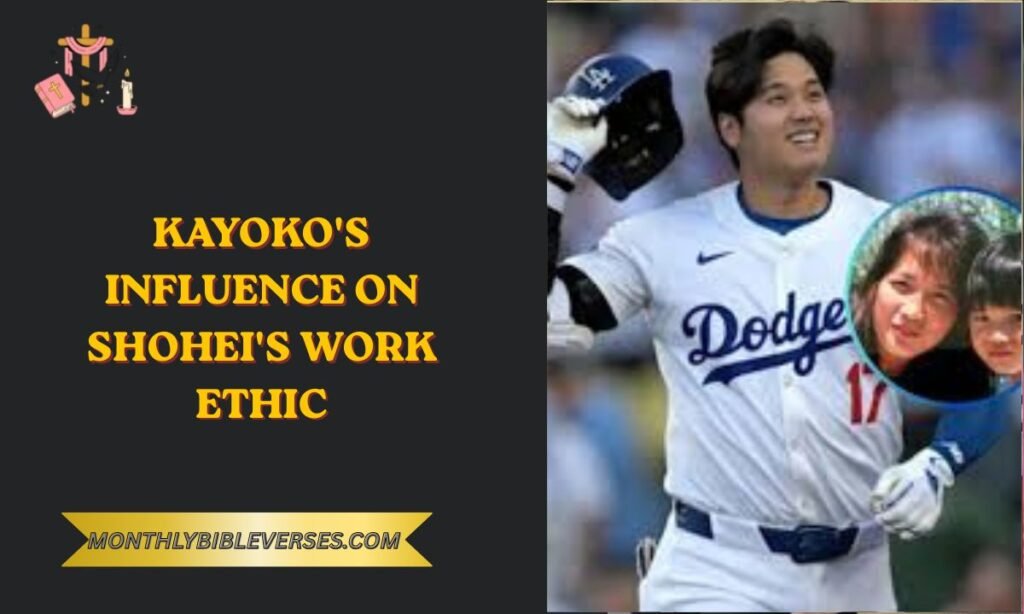
Kayoko’s experiences as a national-level athlete gave her deep insight into what professional sports demands both mentally and physically — understanding how critical discipline and perseverance are when facing adversity. These lessons were passed on to Shohei, who has proven himself to be a relentlessly industrious person who remains calm during competition.
The Ohtani work ethic is legendary in baseball circles. Shohei is known for arriving early, staying late, studying opponents obsessively, and maintaining physical conditioning that most athletes half his workload could not sustain. Those habits began in Ōshū, coached partly by a badminton-playing mother who knew that talent without effort is worthless.
Kayoko noted that when his switch is on, Shohei concentrates and does it all at once — but when it is off, he is completely off, playing more happily than anyone else during breaks. This healthy on-off rhythm — intensity when it matters, genuine rest when it doesn’t — is a sophisticated psychological skill. And it came from home.
Balancing Personal Life and Career
Running a household of five while supporting a husband’s amateur athletic commitments and raising three children — one of whom would become the most famous Japanese athlete in history — demanded considerable personal balance. Kayoko achieved this not through extraordinary resources but through disciplined priorities and cultural clarity about what mattered most: family, character, and consistent effort.
She maintained her own identity throughout. She did not subsume herself entirely into Toru’s coaching ambitions or Shohei’s baseball career. Her athletic identity — as a former competitive badminton player — remained part of who she was, and that independent sense of self modeled something vital for her children: that supporting others does not mean erasing yourself.
Legacy and Recognition
Kayoko Ohtani will never appear on a list of MLB Hall of Famers. She will likely never host a press conference or write a memoir. But her legacy is embedded in every pitch Shohei Ohtani throws, every home run he hits, and every gracious post-game interview he gives.
Her story is a testament to the essential, often underappreciated role of parents behind high-achieving athletes. By nurturing character, work ethic, and resilience, Kayoko Ohtani has contributed not only to Shohei’s success but also to the broader conversation about parenting, mentorship, and the development of talent in sports. Her influence is enduring, reflecting a life dedicated to supporting her child’s dreams while instilling values that extend beyond athletic achievement.
In Japan — a country that reveres its elite athletes with near-religious intensity — Kayoko is quietly celebrated. Fans express gratitude for her on social media, particularly around Mother’s Day. The message is consistent: without her, there is no Shohei.
Personal Life and Privacy
Kayoko continues to live in Ōshū, Japan, with her husband Toru. She has not sought public attention, has not engaged with media beyond what family occasions require, and has not commercialized her connection to Shohei in any known way.
Despite her lack of public appearances or interviews, Kayoko has garnered immense respect. Fans admire how much she loved her family, how she helped Shohei succeed behind the scenes, and the quiet confidence she has consistently demonstrated.
Her privacy is not evasive — it is consistency. She was private before Shohei was famous, and she has remained private since. That coherence is itself a kind of integrity.
Also Read This: Mya Lesnar Height, Weight & Bio: All About Brock Lesnar’s Daughter
Recognition in Media and Fan Communities
Though Kayoko rarely appears in mainstream sports media, she occupies a beloved space in fan communities worldwide — particularly among Japanese baseball fans and those who follow the human stories behind athletic greatness.
Every Mother’s Day, images of Kayoko at her son’s games circulate widely on social platforms. Fan communities dedicated to Shohei Ohtani regularly discuss her influence, with many crediting her athletic background and emotional steadiness as foundational to everything Shohei has become.
In a sports media landscape saturated with attention on players’ statistics and contracts, Kayoko’s story resonates with a different audience: parents, coaches, and anyone who believes that what happens at home matters as much as what happens on the field.
Conclusion
Kayoko Ohtani is the quiet architect behind one of the most remarkable athletic careers in modern sports history. Born and raised in Ōshū, Japan, she brought her own athletic discipline — forged on national-level badminton courts — into the household where Shohei Ohtani learned what excellence looks like. She balanced Toru’s rigorous coaching with emotional warmth, cultural grounding, and a parenting philosophy that prioritized character over accolades.
She never sought credit. She never gave interviews about her role. She showed up at her son’s games, sat in the stands, and let the results speak for themselves.
But for anyone who wants to understand how Shohei Ohtani became who he is — as a player and as a person — the story begins not at Dodger Stadium, and not at the Hokkaido Nippon-Ham Fighters’ training facility. It begins in a small city in Iwate Prefecture, with a mother who competed at the national level, understood what greatness demands, and quietly gave everything she had to help her son reach it.
Frequently Asked Questions
Who is Kayoko Ohtani?
Kayoko Ohtani is the mother of MLB superstar Shohei Ohtani and a former national-level badminton player from Ōshū, Iwate Prefecture, Japan.
What sport did Kayoko Ohtani play?
She competed in badminton at the national level during high school — a background that directly influenced Shohei’s early athletic development and hand-eye coordination.
How did Kayoko influence Shohei Ohtani’s career?
She introduced Shohei to multi-sport activities from infancy, instilled discipline and emotional balance, and provided unwavering support through every critical career decision he made.
Is Kayoko Ohtani on social media?
No, she maintains no known public social media presence and has consistently chosen to live privately despite her son’s global fame.
Where does Kayoko Ohtani live?
She continues to reside in Ōshū, Iwate Prefecture, Japan, alongside her husband Toru Ohtani.
How tall is Kayoko Ohtani?
She is reported to be approximately 5’8″ (173 cm) tall — notably above average height for a Japanese woman, a trait Shohei inherited along with her athletic genes.
Did Kayoko attend Shohei’s MLB games?
Yes, Kayoko and Toru have attended significant milestones in Shohei’s MLB career, including his debut season with the Los Angeles Angels in 2018, though they do so quietly and without seeking attention.
What values did Kayoko instill in Shohei?
She instilled humility, perseverance, respect, emotional discipline, and a strong sense of Japanese cultural identity — all of which are prominently visible in Shohei’s public conduct today.
Does Kayoko have other children besides Shohei?
Yes, she has two other children: an older daughter named Yuka and an older son named Ryuta, who also plays baseball in Japan’s Industrial Baseball League.
What is Kayoko Ohtani’s connection to Shohei’s two-way player identity?
Her encouragement of multi-sport participation — badminton, swimming, and baseball — and her refusal to restrict Shohei to a single discipline from an early age are widely cited as foundational to his development as a two-way player.

Akash is a dedicated writer from the USA, committed to sharing insightful and inspiring Bible verses. With a focus on faith, spiritual growth, and daily encouragement, he aims to provide readers with meaningful scripture reflections to strengthen their relationship with God and enrich their devotional journey.